Start Your Path To Healing And Justice
Schedule A Call Now
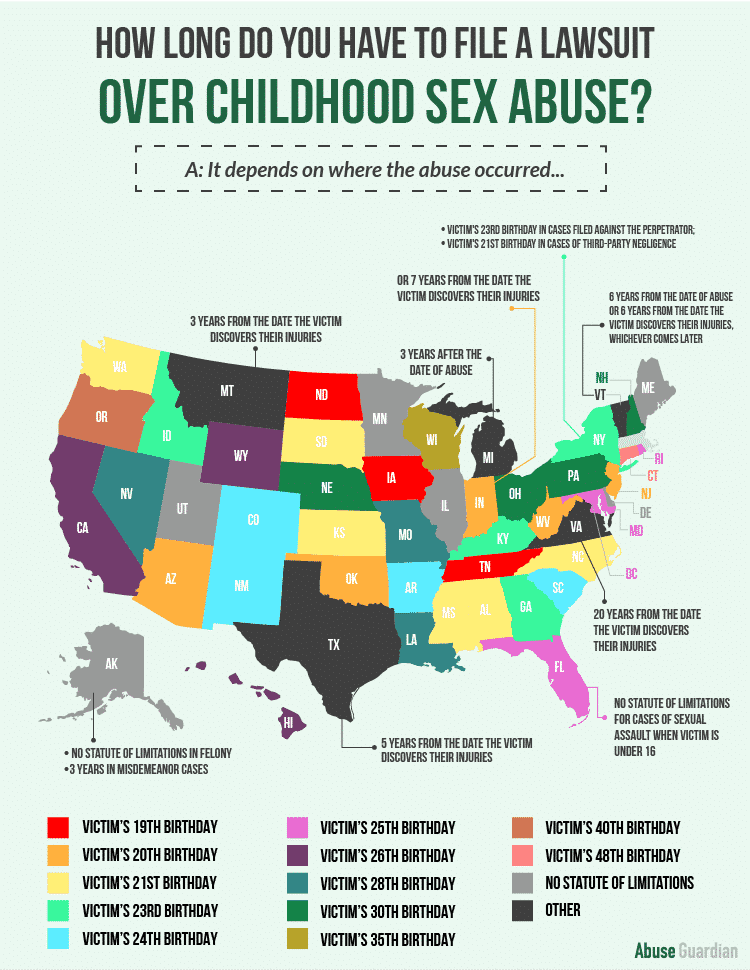
A statute of limitations can prevent a civil lawsuit for child sex abuse or adult sexual assault from being filed if the heinous act took place so long ago that the right to bring the lawsuit has expired under that specific State's legislation. So you may be asking:
You likely have other questions. Call us and allow us the opportunity to earn your trust.
Learn more about Sexual Abuse Laws.
Every state has a law called the "statute of limitations," which restrict the amount of time survivors of sexual abuse have to file a lawsuit. These laws are extremely nuanced in their own right, but there's also a significant distinction between civil statutes of limitation and criminal statutes of limitation.
Civil statutes limit the amount of time survivors have to file a civil lawsuit against the perpetrator of abuse or a negligent third party. Criminal statutes limit the amount of time prosecutors have to file criminal charges against an offender.
In this guide, we'll cover every state's civil statute of limitations on childhood sexual abuse. But first, there are some basic concepts to cover.
For older survivors, the statute of limitations almost always begins counting down on the date the abuse or sex assault occurred. But crimes against minors are regulated differently. Nearly every state "tolls" its civil statute of limitations until the minor has reached the age of majority. That means that in most states, the civil statute of limitations will only begin to count down once a victim has turned 18.
If you or someone you know experienced sexual abuse as a child, understanding these time constraints is crucial. Missing this deadline can prevent you from pursuing justice in court.
The majority of states also use what's known as a "discovery rule." These laws recognize that sexual abuse can cause significant psychological trauma. Many survivors repress their memories of abuse, which means they may only become aware of what's happened to them much later. By the time a victim is able to confront the reality of abuse, or recognize the connection between the abuse and the harm it's caused, the normal statute may have already ended.
Discovery rules "toll," or pause, the statute until a survivor is able to connect their injuries to what happened in the past.
The statute of limitations on child sexual abuse plays a significant role in your ability to seek justice. Understanding your rights and seeking the guidance of an experienced lawyer is vital. Don’t let time slip away—take action today.