Employer Vicarious Liability
When an employee abuses the trust and access their job gave them, the organization behind them can be held responsible too. Here is what that means for you.

What it means
Employer vicarious liability is when an organization is held legally responsible for sexual abuse committed by one of its employees
In plain language, vicarious liability means the institution does not get to walk away just because one person did the harming. When an employer placed someone in a position of trust, gave them authority over you, and that role created the access that made the abuse possible, the law can hold the employer accountable for what their employee did. You are not only allowed to look at the individual who hurt you. You can look at the people and the organization that put them there.
This matters because the person who abused you may have little ability to make things right, while the institution that enabled them often has insurance, resources, and a duty it failed to honor. Vicarious liability recognizes a simple truth: when an organization profits from the trust the public places in its staff, it also carries responsibility when that trust is used as a weapon. Holding the institution accountable is not about revenge. It is about making sure the place that allowed this has a reason to keep it from happening to someone else.
Time limits do apply, and they vary by state. Many states have recently expanded or reopened the window to file. A free, confidential call simply tells you where you stand — no pressure, no obligation.
How it works
How vicarious liability works in a sexual abuse case
Courts look at the connection between the abuse and the job the employer gave the person. Historically, institutions argued that sexual assault could never be part of anyone's job duties, so they could not be on the hook. Modern courts increasingly reject that escape hatch and ask a more honest question: did the employment relationship create the opportunity, authority, or access that made the abuse possible? An attorney building your case will typically look at points like these:
- Position of power. The employer vested the person with authority, trust, or unsupervised access to you — as a teacher, coach, clergy member, doctor, counselor, or supervisor.
- Sufficient connection to the job. The abuse happened within the context of the employment relationship — on the premises, during programs or appointments, or while the person was acting in their official role.
- Access the role created. The job gave the person private contact, control over schedules or grades or care, or the ability to isolate you in ways an ordinary stranger never could.
- The institution benefited from the trust. Families, patients, students, or congregants were told to rely on this person because the organization stood behind them.
- Related failures. Negligent supervision, hiring, or retention — where the organization knew or should have known about the danger — is a separate but often parallel path to holding the same institution accountable.
You do not need to have all of this figured out yourself. These are the threads an experienced attorney pulls apart for you, using records, prior complaints, and witnesses.
Why survivors trust us
Real attorneys. Proven results. Quiet strength.
Where it applies
Settings where vicarious liability commonly arises
Whenever an organization places a trusted adult in close contact with vulnerable people, this theory can come into play. A few of the most common settings:
Schools and youth programs
Teachers, coaches, aides, and staff are given authority and private access to students. When that access is used to abuse, the school or district can face vicarious liability.
Religious organizations
Clergy, youth leaders, and volunteers act with the trust of the congregation behind them. When that role enabled abuse, the institution may be held responsible.
Healthcare and care facilities
Doctors, nurses, aides, and therapists have intimate, unsupervised access to patients and residents. Employers can be liable when that access is exploited.
Law enforcement and authority roles
Officers, guards, and others vested with official power can use that authority to coerce and isolate. The agency that gave them the badge may share responsibility.
Simple & safe
How it works
Reach out privately
Call or fill out a short, confidential form. Tell us only what you’re comfortable sharing.
We listen & match you
We connect you with an attorney licensed in your state who handles your type of case.
You decide what’s next
Your free consultation is no-obligation. If you move forward, there’s no fee unless you win.
Named, credentialed, local
Attorneys licensed in your state
Every connection is to a real attorney with verifiable credentials and a record of holding institutions accountable.
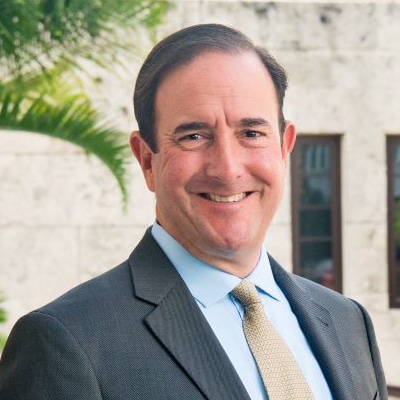
Michael Haggard, Esq.

Laurence Banville, Esq.

Eric Weitz, Esq.

Max Morgan, Esq.

Jeff Gibson, Esq.

Ervin Nevitt, Esq.

John Bey, Esq.

Aman Sharma, Esq.

Dan Lipman, Esq.

Joshua Gillispie, Esq.

Jennifer Lipinski, Esq.

Aaron Blank, Esq.
Common questions
Vicarious liability, answered
What is employer vicarious liability in a sexual abuse case?
It is a legal doctrine that can hold an employer or institution responsible for sexual abuse committed by an employee when the job created the trust, authority, or access that made the abuse possible. It lets you pursue the organization, not only the individual who caused the harm.
How is vicarious liability different from negligent hiring or supervision?
Vicarious liability focuses on the connection between the abuse and the employee's role — the organization answers for what its employee did. Negligent hiring, supervision, or retention focuses on the institution's own failures, such as ignoring warning signs. Both can target the same employer, often in the same case.
Do courts really hold employers responsible for sexual assault?
Increasingly, yes. Older arguments claimed assault could never fall within job duties, so employers escaped liability. Modern courts and recent legal developments focus instead on whether the employment relationship enabled the abuse, making it more possible than ever to hold institutions accountable.
How do you prove vicarious liability?
An attorney shows that the employer placed the person in a position of trust and that the abuse was connected to that role and the access it created. Evidence often includes employment records, prior complaints, disciplinary files, organizational policies, and testimony from others affected.
Can vicarious liability apply to my case?
It may, if the person who abused you was acting as an employee, volunteer, or representative of an organization, and the role gave them the trust or access that made the abuse possible. The only way to know is to have your specific situation reviewed confidentially — no pressure, no judgment.
Is there a deadline to bring this kind of claim?
Every state sets its own time limits, and many have expanded or revived them for survivors of sexual abuse in recent years. Deadlines are simply facts to check, not reasons to panic. The sooner your situation is reviewed, the more options are likely to remain open.
What does it cost to talk to an attorney about this?
An initial consultation is free and confidential. Attorneys in this network generally work on a contingency basis, meaning you pay nothing up front and they are paid only if your case succeeds. Cost should never be the reason you stay silent.
Do I have to confront the person who abused me?
No. Pursuing an institution through vicarious liability is a legal process handled by your attorney. You stay in control of what you share and when, and a trauma-informed lawyer's job is to carry that weight so you do not have to face it alone.
Free & confidential
Talk with someone who understands
Share what happened, at your own pace and in confidence. A compassionate member of our team will help you understand whether an institution can be held accountable in your situation.
- 100% confidential — your privacy is protected
- No fee unless we win your case
- You stay in control of every step
Prefer to talk now? (877) 421-9608
Start your free case review
It only takes a minute. Share what you’re comfortable with.
You don’t have to carry this alone.
Take the first step on your terms. A free, confidential conversation could be the start of getting the justice and support you deserve.