Failure to Warn & Failure to Protect
When an organization knew about a danger and stayed silent, the law can hold it responsible, not just the person who caused harm.
What it means
Failure to warn and failure to protect: knowing about a risk and doing nothing to stop it.
Failure to warn occurs when an organization has information about a danger (a complaint, a pattern of behavior, a known history) and fails to inform the families, students, patients, or staff who need to know. Failure to protect is the closely related breach: the organization had a duty to keep you safe, saw or should have seen the warning signs, and failed to act. The two often appear together in the same case.
These theories matter because abuse rarely happens in a vacuum. Schools, youth programs, hospitals, foster agencies, and faith organizations take on a legal duty of care when they invite vulnerable people through their doors. When that duty is ignored, the harm that follows is not just one person's wrongdoing: it is an institutional failure. Holding the institution accountable can also reach the resources and insurance that make real recovery possible, even when the individual who caused harm is never criminally convicted.
Time limits do apply, and they vary by state. Many states have recently expanded or reopened the window to file. A free, confidential call simply tells you where you stand — no pressure, no obligation.
How it works
How failure to warn and failure to protect work in a sexual abuse case.
You do not have to prove that leadership personally witnessed the abuse. The question is what the institution knew or reasonably should have known, and what it did with that knowledge. A claim usually turns on showing some combination of the following:- A duty of care existed. The organization was responsible for your safety — as a student, patient, resident, congregant, or participant in its program.
- There were warning signs. Prior complaints, rumors, a documented history, boundary-crossing behavior, or red flags the organization saw or should have caught.
- The institution failed to act. It ignored reports, kept the person in a position of access, skipped required background checks, or quietly transferred them instead of removing them.
- It failed to warn. Families, staff, or others at risk were never told about a danger the organization already knew about.
- That failure allowed the harm. The abuse happened or continued because the institution did not do what a reasonable organization would have done.
Why survivors trust us
Real attorneys. Proven results. Quiet strength.
Where it applies
Settings where failure to warn and failure to protect commonly arise
These claims appear across many institutions that hold a duty to keep vulnerable people safe.
Schools & youth programs
Districts, private schools, camps, and after-school programs that ignored complaints or kept an employee in contact with students.
Faith organizations
Churches and religious institutions that quietly reassigned a known abuser instead of warning their community.
Foster care & group homes
Agencies and residential facilities that overlooked warning signs about a caregiver or another resident.
Hospitals & medical settings
Hospitals, clinics, and care facilities that failed to act on prior reports about a provider or staff member.
Simple & safe
How it works
Reach out privately
Call or fill out a short, confidential form. Tell us only what you’re comfortable sharing.
We listen & match you
We connect you with an attorney licensed in your state who handles your type of case.
You decide what’s next
Your free consultation is no-obligation. If you move forward, there’s no fee unless you win.
Named, credentialed, local
Attorneys licensed in your state
Every connection is to a real attorney with verifiable credentials and a record of holding institutions accountable.
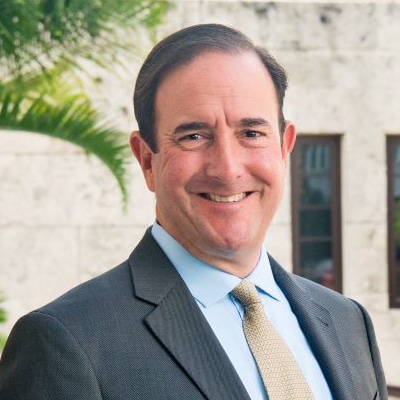
Michael Haggard, Esq.

Laurence Banville, Esq.

Eric Weitz, Esq.

Max Morgan, Esq.

Jeff Gibson, Esq.

Ervin Nevitt, Esq.

John Bey, Esq.

Aman Sharma, Esq.

Dan Lipman, Esq.

Joshua Gillispie, Esq.

Jennifer Lipinski, Esq.

Aaron Blank, Esq.
Common questions
Failure to warn and failure to protect, answered
What is a failure to protect lawsuit?
A failure to protect lawsuit is a civil claim that holds an institution accountable for not preventing or stopping sexual abuse it had a duty to guard against. It focuses on the organization's choices — ignored complaints, missed warning signs, or unsafe practices — rather than only on the person who caused harm.
What is the difference between failure to warn and failure to protect?
Failure to warn means an institution knew about a danger and never told the people who needed that information. Failure to protect means it had a duty to keep you safe and failed to act on a known or foreseeable risk. The two often overlap and frequently appear together in the same case.
How do you prove failure to protect in an abuse case?
You show the institution had a duty of care, that warning signs existed, that it failed to act reasonably, and that this failure allowed the harm. Proof usually comes from personnel files, internal complaints, emails, policies, and witness testimony. Your attorney gathers and develops this evidence for you.
Do I have to prove leadership personally saw the abuse?
No. The standard is what the institution knew or reasonably should have known. Prior complaints, documented history, or ignored red flags can be enough. You do not need proof that an executive or supervisor personally witnessed anything for the organization to be held responsible.
Can I sue the institution if the abuser was never criminally convicted?
Yes. A civil failure to protect case is separate from any criminal case and uses a lower standard of proof. You can pursue compensation from the institution for the harm you suffered even if the person who abused you was never charged, convicted, or identified by name.
Is there a time limit on these cases?
There is a deadline, called the statute of limitations, and it varies by state. Many states have expanded or removed these limits for child sexual abuse, and the clock often does not start until a survivor reaches adulthood. Because the rules differ, it is worth confirming your specific deadline early, calmly and with no pressure.
What can a failure to protect claim recover?
A civil claim can seek compensation for emotional and psychological harm, counseling and treatment, and the lasting impact on your life. Because you are pursuing an institution, the case can also reach organizational liability insurance, which often makes meaningful recovery possible.
What does it cost to talk to an attorney?
A first conversation is free and confidential. Attorneys in this network handle these cases on contingency, meaning you pay nothing upfront and they are only paid if your case succeeds. There is no cost or obligation to learn where you stand.
Free & confidential
Talk with someone who understands
Share what happened in your own words, when you're ready. Your message is confidential, and a conversation costs nothing.
- 100% confidential — your privacy is protected
- No fee unless we win your case
- You stay in control of every step
Prefer to talk now? (877) 421-9608
Start your free case review
It only takes a minute. Share what you’re comfortable with.
You don’t have to carry this alone.
Take the first step on your terms. A free, confidential conversation could be the start of getting the justice and support you deserve.