Institutional Liability for Sexual Abuse
When an organization's negligence opened the door to abuse, the law can hold that institution responsible, not just the individual who caused the harm.


What it means
Institutional liability holds an organization legally responsible when its failures enabled the abuse.
Institutional liability means that a school, church, youth program, hospital, employer, or other organization can be sued in civil court when its negligence, weak policies, or silence allowed sexual abuse to happen. The focus is not only on the person who committed the abuse. It is on the institution that was supposed to keep you safe, and did not. This matters because the people who harm survivors are often connected to a trusted organization, and that organization frequently has the power and the duty to prevent it. When a background check was skipped, a complaint was buried, or a known risk was ignored, the institution may share legal responsibility. You do not need to have reported the abuse at the time, and in many cases, you do not need a criminal conviction against the individual for a civil claim to move forward.Time limits do apply, and they vary by state. Many states have recently expanded or reopened the window to file. A free, confidential call simply tells you where you stand — no pressure, no obligation.
How it works
How does institutional liability work in a sexual abuse case?
Most institutional claims come down to a simple idea: the organization had a duty to protect you, it failed in that duty, and that failure contributed to the abuse. Lawyers establish this through a few well-recognized legal theories, often more than one in the same case.- Negligent hiring and screening: The organization brought someone on without a proper background check, or despite warning signs in their history.
- Negligent supervision and retention: The organization failed to supervise an employee or volunteer or to keep that person on after concerns were raised.
- Vicarious liability: An employer can be held responsible for acts committed within the scope of an employee's role or position of trust.
- Failure to report or act: Staff ignored disclosures, suppressed complaints, or protected the institution's reputation instead of removing a known danger.
- Inadequate policies or training: There were no real safeguarding rules, no two-adult policies, or no training on mandatory reporting.
Why survivors trust us
Real attorneys. Proven results. Quiet strength.
Where it applies
Settings where institutional liability commonly arises
Almost any organization that places adults in positions of trust over children or vulnerable people can face institutional liability when it fails to protect them.
Schools & universities
Public and private schools, colleges, and federally funded programs can be liable when they show deliberate indifference to reports of abuse or harassment.
Churches & faith organizations
Religious institutions can be held responsible when they transferred, shielded, or failed to remove someone known to be a danger.
Youth & sports programs
Camps, clubs, scouting, and athletic programs carry a duty to screen, supervise, and respond to concerns about staff and volunteers.
Medical & care facilities
Hospitals, treatment centers, foster systems, and group homes can be liable for negligent hiring, supervision, and ignored complaints.
Simple & safe
How it works
Reach out privately
Call or fill out a short, confidential form. Tell us only what you’re comfortable sharing.
We listen & match you
We connect you with an attorney licensed in your state who handles your type of case.
You decide what’s next
Your free consultation is no-obligation. If you move forward, there’s no fee unless you win.
Named, credentialed, local
Attorneys licensed in your state
Every connection is to a real attorney with verifiable credentials and a record of holding institutions accountable.
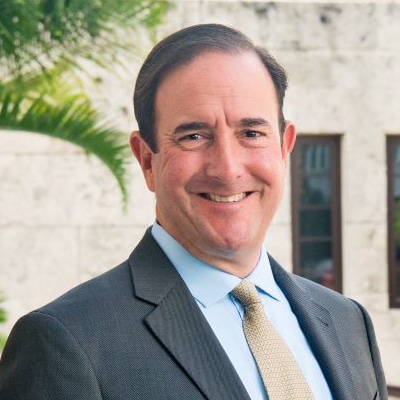
Michael Haggard, Esq.

Laurence Banville, Esq.

Eric Weitz, Esq.

Max Morgan, Esq.

Jeff Gibson, Esq.

Ervin Nevitt, Esq.
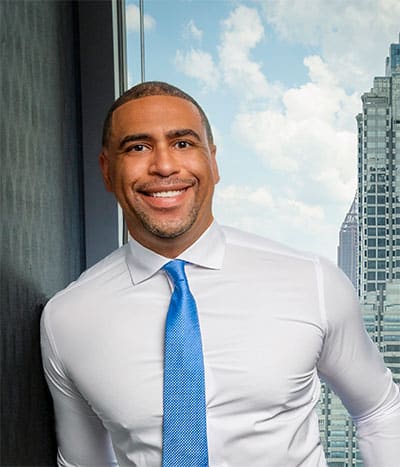
John Bey, Esq.

Aman Sharma, Esq.

Dan Lipman, Esq.

Joshua Gillispie, Esq.

Jennifer Lipinski, Esq.

Aaron Blank, Esq.
Common questions
Institutional liability, answered
What is institutional liability for sexual abuse?
It is when an organization (a school, church, employer, or youth program) is held legally responsible because its negligence or failures enabled abuse to happen. The claim targets the institution itself, not only the individual who committed the harm, and is pursued in civil court.
How do you prove an institution is liable?
You generally show the organization had a duty to protect you, that it breached that duty, and that the breach contributed to the abuse. Proof often comes from personnel files, prior complaints, internal communications, and patterns showing the institution knew or should have known about the risk.
What are some examples of institutional negligence?
Common examples include skipping background checks, hiring someone despite a known history, failing to supervise staff, ignoring or burying complaints, transferring a known offender instead of removing them, and having no safeguarding policies or mandatory-reporting training.
Can an institution be liable if the abuser was never criminally convicted?
Yes. A civil claim against an institution is separate from a criminal case and uses a lower standard of proof. Many survivors pursue and resolve civil claims even when there was no arrest, charge, or conviction of the individual.
Could institutional liability apply to my case?
It often can if a trusted organization was connected to what happened to you. The only way to know for certain is to have your specific situation reviewed privately by an attorney, who can identify which legal theories may apply.
Is there a deadline to file an institutional abuse claim?
Yes, every state sets a time limit, but many states have expanded or extended these deadlines for sexual abuse, and some have opened special filing windows. Because the rules vary and change, it is worth confirming your current deadline rather than assuming it has passed.
How much does it cost to talk to an attorney?
An initial conversation is free and confidential. Attorneys in this network typically work on a contingency basis, meaning you pay nothing upfront and they are paid only if your case succeeds.
Will my information stay private?
Yes. Your inquiry is confidential, and experienced attorneys handle these matters with discretion. You control how much you share and how your case moves forward at every step.
Free & confidential
Talk with someone who understands
Share what happened when you're ready. Your message is confidential, there is no cost to ask, and you decide what comes next.
- 100% confidential — your privacy is protected
- No fee unless we win your case
- You stay in control of every step
Prefer to talk now? (877) 421-9608
Start your free case review
It only takes a minute. Share what you’re comfortable with.
You don’t have to carry this alone.
Take the first step on your terms. A free, confidential conversation could be the start of getting the justice and support you deserve.
Explore more